
Plan your next dental procedure with 3D CBCT panoramic dental X-ray in Cyprus
Preparing for braces, implants, or a complex dental procedure? Our CBCT (Cone Beam Computed Tomography) scanner at Elvetiko in Nicosia produces a complete 3D panoramic view of your teeth, jaws, sinuses and TMJ in under a minute, with images provided on the day of your scan.
-
No referral required for private dental X-rays
-
3D panoramic images of teeth, jaws, sinuses and soft tissues
-
Walk-in dental X-ray appointments in Nicosia
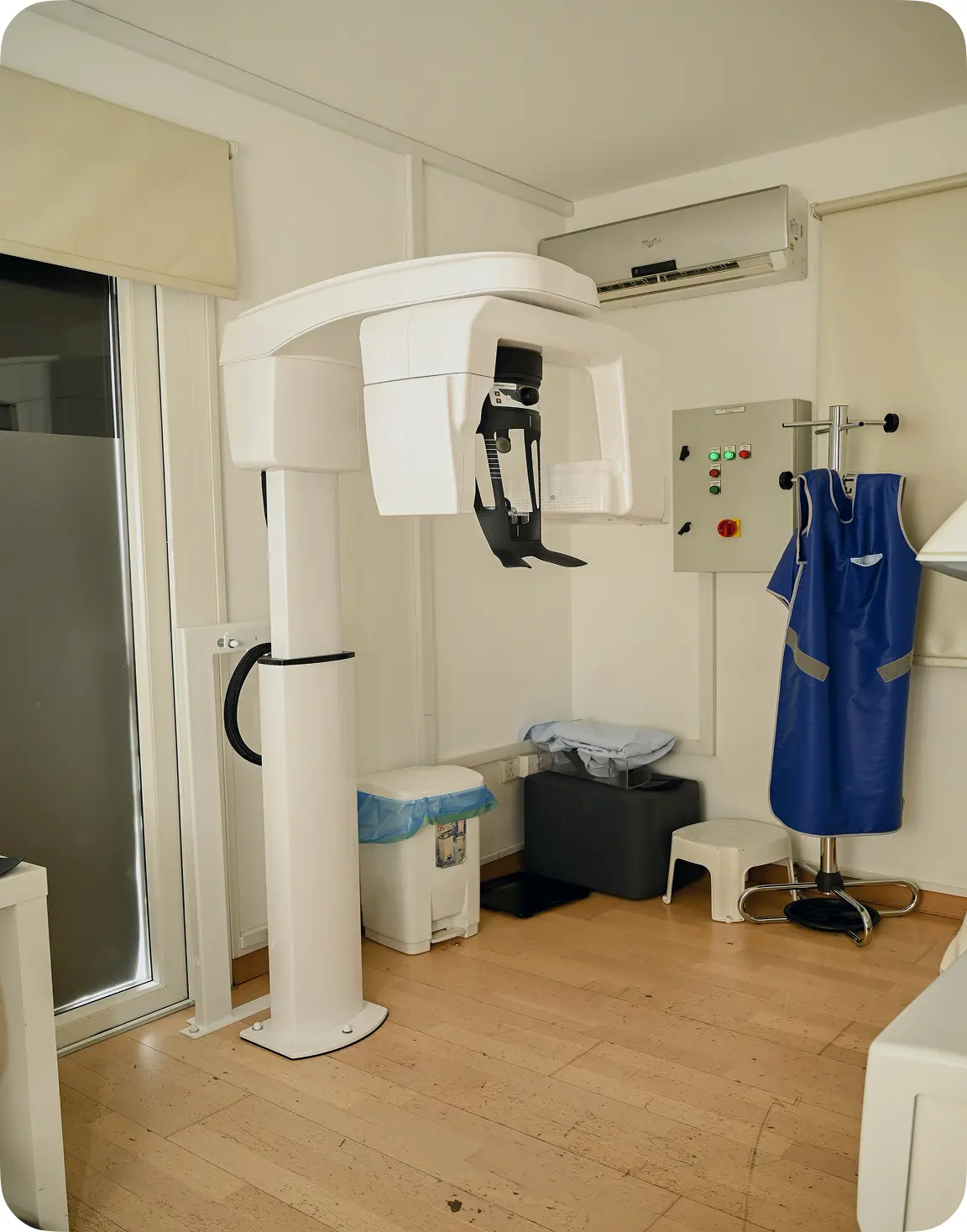
What is a CBCT or panoramic dental x-ray?
A CBCT scan (Cone Bean Computed Tomography) is an advanced X-ray technology that produces three-dimensional views of your entire oral and maxillofacial region. CBCT scans essentially take hundreds of 2D snapshots that are then digitally integrated to produce a detailed panoramic. These panoramic images allow dental professionals to evaluate oral health issues and develop the most effective treatment plan
Do I need a CBCT scan?
Your dentist may request a CBCT scan to assess the development of common dental issues such as wisdom teeth, bone loss, infections, and TMJ issues. They may also use it to plan your braces, implants, dentures, or other major oral surgeries (i.e., sinus lifts, etc.). Many people choose panoramic dental X-rays when switching dentists to ensure their new provider has a clear understanding of their current oral health
Protect your next dental investment with a panoramic dental X-ray
While regular dental or facial x-rays provide you with a two-dimensional view of a specific area, panoramic dental x-rays offer a comprehensive, three-dimensional view of everything from your teeth and gums to your surrounding joints, nerves and soft tissues in heightened detail. This accuracy allows dentists to make the most effective treatment plans possible
Book a CBCT scan today to ensure your next dental investment is as effective as possible

What it detects
-
Infections
-
Bone loss in the jaw
-
Abscessed teeth
-
Tooth decay
-
Jaw structure
-
Curved Roots
-
Unerupted/ impacted teeth
-
Cysts
-
Certain tumours
-
TMJ issues
-
Issues with sinuses, nasal cavities
-
Adult teeth development
How It Works
-
01

Book & Referral
-
02

Scan
-
03

Results
What to expect on the day of your scan
Scanxiety is real. We’ve found that knowing exactly what to expect can help ease scan-related stress
-
Check-In
01On the day of your scan, you’ll start by checking in at the reception, where you’ll be asked to fill out some forms
-
Comfortable extremity and instructions
02You will then be assigned a CBCT technologist. They will accompany you into an examination room, where your head will be positioned onto a chin rest. You will then have to bite down on a disposable plastic tab, or “bite plane,” to ensure your bite is aligned during the scan
-
Scan procedure
03During the scan, the technologist will take images of the target area, which usually takes less than a minute
The benefits of dental scanning
-
Non-Invasive
CBCT scans offer a fuss-free solution to the discomfort of traditional oral x-rays that require placing plastic film holders in your mouth
-
High Resolution
Our panoramic dental X-ray technology offers a much more detailed view of your bones and soft tissues, ensuring effective and accurate dental treatments
-
More Efficient
Instead of having to take several different x-rays to get a full scope of your oral health, CBCT scans combine hundreds of x-rays to produce one panoramic image of all your major structures
What hundreds of scanned & happy patients have to say


FAQ
-
What’s the difference between a regular dental X-ray and a CBCT scan?
A dental X-ray provides two-dimensional images to assess the progress of minor dental issues. In contrast, CBCT scans provide a three-dimensional dental panoramic X-ray that provides dentists with more detail and scope to plan complex treatments and surgeries
-
Are there any health or safety risks associated with a panoramic dental X-ray?
Like any X-ray scan, CBCT scans expose the patient to a small amount of ionising radiation. However, the risks of contracting cancer from this level of exposure are extremely low. The amount of radiation emitted from a dental X-ray is comparable to what you would be exposed to from everyday devices such as smartphones, laptops, and TVs. Although they are completely safe during pregnancy, they are generally not recommended for pregnant individuals or children unless absolutely necessary for a diagnosis
-
How do I prepare for a panoramic dental X-ray?
Ensure your teeth are recently brushed to provide a clean working environment for your technologist. Otherwise, no other special preparation is required
-
How often should I get dental X-rays?
Dentists recommend that individuals with good oral health and no outstanding issues get dental X-rays every 6-18 months. However, individuals with ongoing oral issues or treatments may be asked to undergo more frequent imaging to monitor their progress. Since dental panoramic X-rays emit slightly more ionising radiation than regular dental x-rays, dentists recommend waiting 2-3 years between scans unless necessary for specific complex treatment plans
-
Can a CBCT scan detect cancer?
Dental panoramic x-rays can detect cysts and certain tumours, which can provide patients with the information necessary to seek further assistance and treatment options with a specialist
-
When will I receive my panoramic dental X-ray scan results?
We provide your images on the day of your scan
-
How soon can I get a CBCT scan in Cyprus?
As soon as you need. We offer same-day scans and walk-in appointments
-
What’s included in the booking price?
Your CBCT scan booking fee includes digital or physical copies of your scans
Don't wait for symptoms.
Join us on our mission to make timely, high-quality diagnostics more accessible to everyone in Cyprus.
